
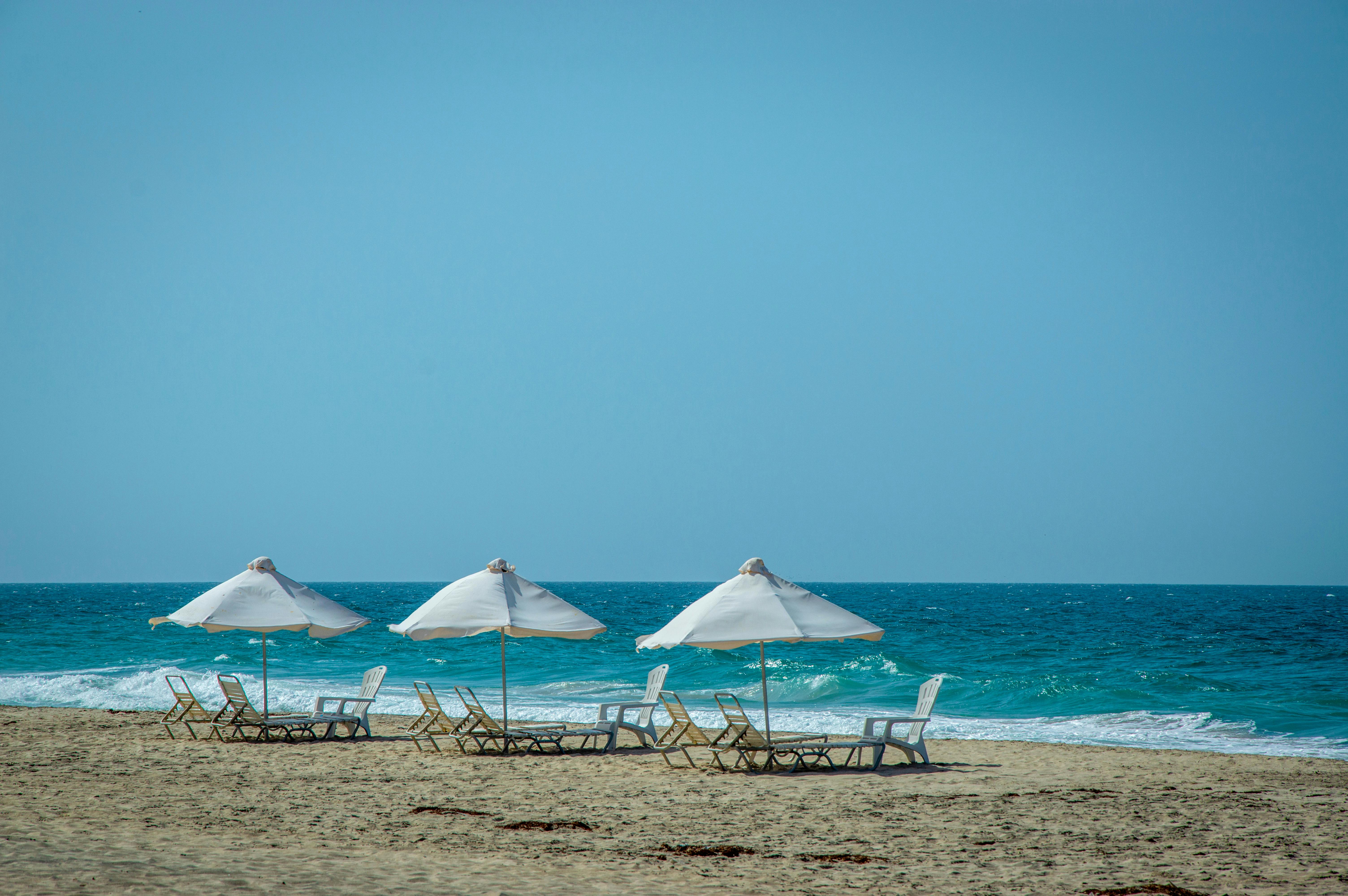
I spent nine days somewhere that looks extraordinary in photographs and had a mediocre time. Nothing went wrong. The weather was fine, the accommodation was fine, nobody was rude to me.
Working out why it did not work has been more useful than any of the trips that did.
Everything was designed for a different visit
The place was organised around a specific kind of holiday — resort, pool, excursions booked at a desk, transport arranged.
That is a perfectly good holiday and it is not the one I wanted. What I wanted was to walk around, eat where people eat, and work out how the place functioned.
The infrastructure for that did not exist. There was no walking anywhere useful, public transport was minimal, and the restaurants outside the resorts were mostly for people who worked in them and did not particularly want visitors.
Neither party was at fault. I had booked a place that does one thing and expected it to do another.
The photographs were of six places
Something I noticed about halfway through and which explains a lot about how destinations are marketed.
Everything I had seen in advance was one of about six locations, photographed from the same angles, by everybody.
Those places were real and they were beautiful and they occupied perhaps two hours of the nine days. The rest of the island was ordinary in the way that everywhere is ordinary, and I had no picture of it at all.
Which is not deception exactly. It is what happens when a place is represented by its most photogenic fragments, and it produces an expectation that the whole place is like that.
Nobody lived where I was
The specific structural problem, and the one I now check for.
The area I stayed in was almost entirely accommodation. The people who worked there commuted in from somewhere else. There was no shop for residents, no school, no market, no bar where anybody was a regular.
Which means every interaction was a transaction with somebody at work, and there was no way to be anywhere that was not organised around visitors.
The places I have most enjoyed have all had a resident population going about its business, and being tolerated within that is most of what I find rewarding.
Seasonality that I had not accounted for
I went at the edge of the season, which I usually consider an advantage.
In a place with a year-round community that works. In a place that exists for the season it means arriving somewhere that is winding down, staffed by people at the end of a long stretch, with half the businesses already closed.
The distinction between shoulder season somewhere real and shoulder season somewhere seasonal is one I had not made, and it is significant.
What I now check before booking
Whether people live there. Specifically: is there a school, a hospital, a market, a supermarket that is not aimed at visitors. This is checkable on a map in about five minutes.
Whether you can walk anywhere. Look at where accommodation is relative to anything else, and measure it. Isolated resorts are isolated on purpose.
What public transport exists and how often it runs, which tells you whether the place is designed for people without cars.
And what the photographs are of. If every image is of the same handful of locations, the rest of the place is unrepresented, which does not mean it is bad and does mean you know nothing about it.
The trips that have worked
Reviewing them, they have all shared a few things.
Somewhere with an economy other than tourism. A working port, agriculture, a university, an industry. That produces a population with its own reasons to be there.
Somewhere I could walk from where I slept to where things happened.
Somewhere large enough to have variety and small enough to be comprehensible within a few days.
And somewhere I had a specific reason to go, rather than somewhere that looked nice.
The general lesson
Destinations are not good or bad. They suit particular kinds of visit, and the mismatch between what a place offers and what a person wants is the source of nearly every disappointing trip I have had.
Which means the useful research is not whether somewhere is good. It is what kind of visit it is set up for, and whether that is the visit you want.
The island is presumably excellent for the holiday it was built for, and the people I saw having that holiday looked perfectly content.
What I would have needed to know
Reconstructing it, three specific facts would have changed the booking.
That the area I chose had no permanent residents. Checkable on a map by looking for a school and a supermarket.
That the walk from the accommodation to anything else was forty minutes along a road with no pavement. Also checkable, and I did not check.
And that the season ended two weeks before I arrived rather than two weeks after, which was findable and which I assumed rather than confirmed.
All three took me under ten minutes to establish afterwards, which is the annoying part.