
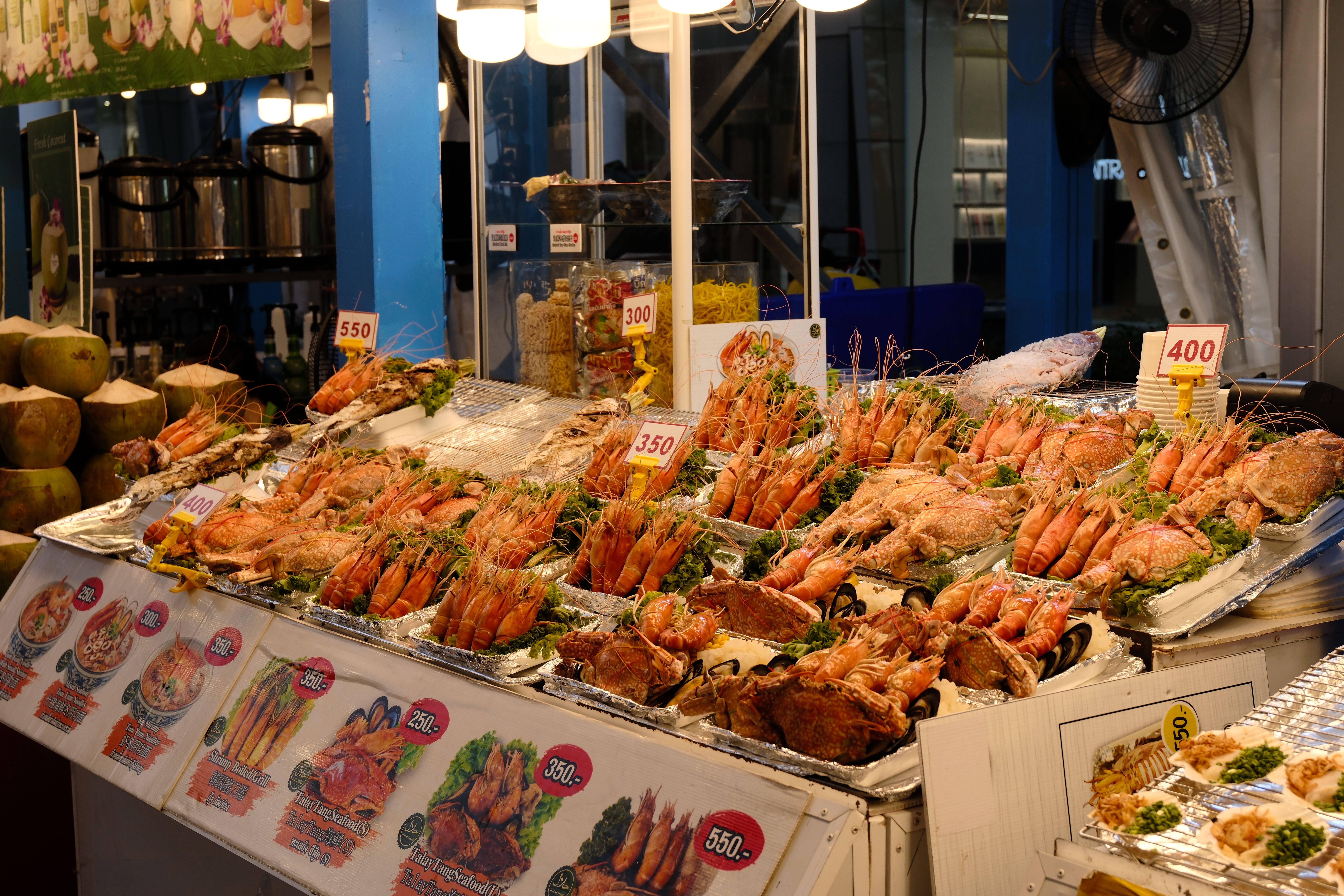
Travellers commonly avoid street stalls and choose a quiet restaurant instead. The reasoning is intuitive and frequently backwards, because the factors that matter are not the visible ones.
Turnover limits how long food sits
Bacterial growth depends heavily on time spent in a warm range between cooking and eating. A stall selling continuously never holds cooked food long enough for that to develop.
Ingredients are bought in small quantities because there is nowhere to store them. Stock arrives in the morning and is gone by evening.
A quiet establishment with a long menu faces the opposite problem. Many dishes require many ingredients, most of which are held for days.
Cooking in view is a real inspection
Street cooking happens in front of the customer, which means preparation, temperature and handling are all observable. Nothing about the process is hidden.
High heat applied immediately before serving is the single most effective control against most foodborne risk. Grilling, frying and boiling to order all achieve it.
Reheated and lukewarm food carries more risk than food that never cooled. Dishes held in a tepid tray are the ones to be cautious about, wherever they are served.
Specialisation improves execution
A stall that makes one dish makes it hundreds of times a day. Technique, timing and sourcing are refined by repetition in a way a broad menu prevents.
Suppliers know a specialist buys the same ingredient daily and compete for that business. Quality is maintained by the relationship rather than by inspection.
This is why the best version of a regional dish is often sold from a stall rather than a restaurant. The economics reward doing one thing properly.
Queues carry useful information
Local customers eat at the same places repeatedly and stop going when something goes wrong. A queue of residents is an accumulated judgement over months.
Queues also guarantee turnover mechanically. Food cannot sit when it is being sold as fast as it is cooked.
An empty stall next to a busy one is usually empty for a reason the locals already know. The signal is comparative rather than absolute.
What still deserves caution
Water and ice are separate questions from cooked food, and they are the more common source of difficulty. Bottled or treated water and drinks without ice remove that variable.
Raw items washed in local water carry the same exposure as the water itself. Salads, cut fruit and garnishes are the usual route.
Anyone with a compromised immune system or particular medical concerns should take advice from a health professional before travelling rather than relying on general guidance.